
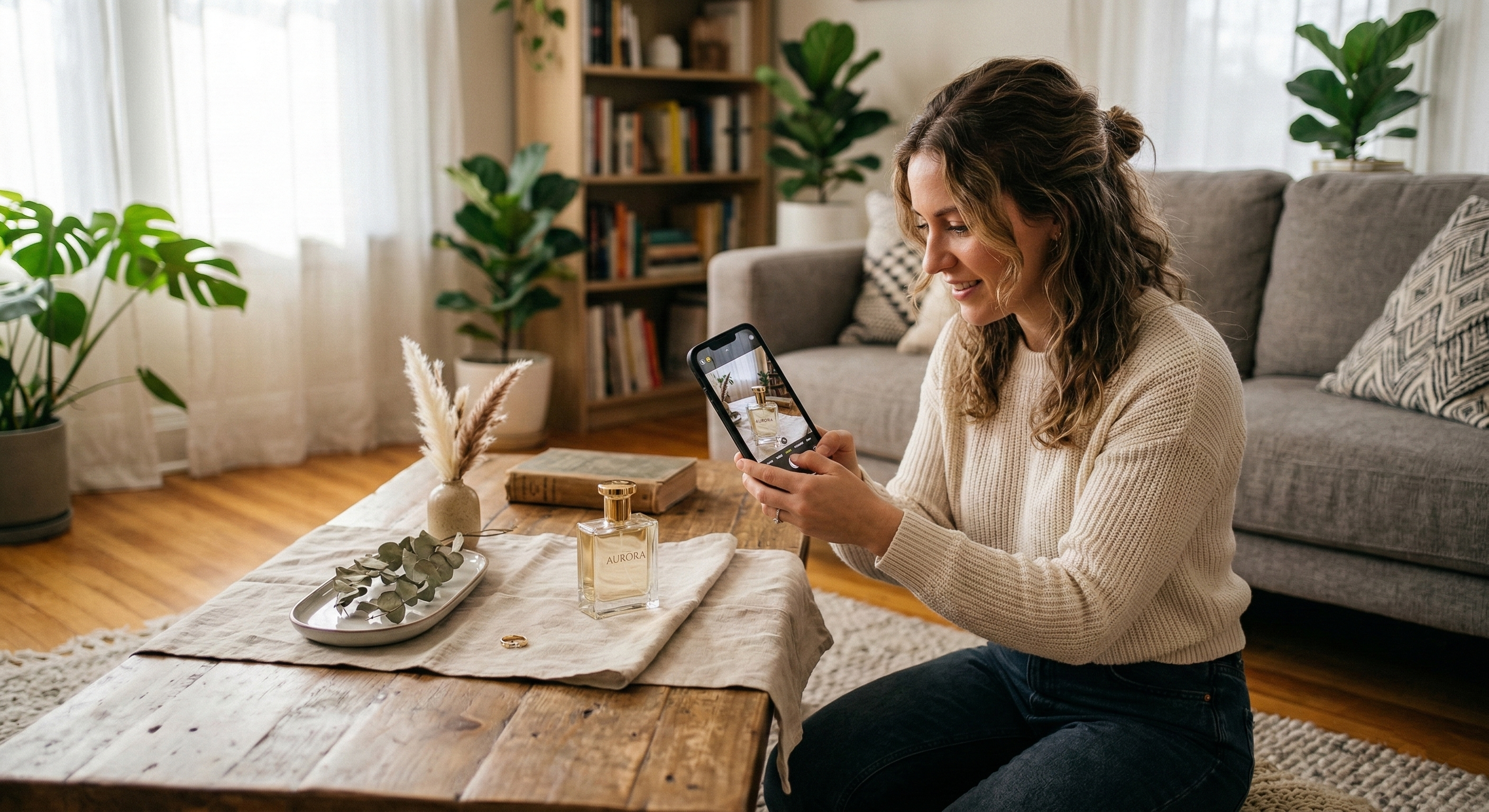
There is a specific kind of dread that every DTC founder knows. You have a product ready to sell, ad concepts sketched out, and the only thing standing between you and launch is product photography. And product photography is expensive, slow, and maddeningly difficult to get right.
A single professional shoot runs $500 to $5,000. Turnaround is measured in weeks. And if the shots come back wrong --- lighting feels off, background clashes with your brand --- you are back to square one.
This bottleneck has quietly throttled small brands for years. Not the product. Not the marketing strategy. The images.
AI-generated product photography is dismantling that bottleneck.
The True Cost of Traditional Product Photography
The shoot itself. Photographer fees, studio rental, props: $1,000 to $3,000 per day.
The turnaround. One to three weeks for editing and delivery --- weeks where your ads are not running.
The iteration tax. You need variations --- different angles, moods, contexts. Each means another round of coordination and another invoice.
The creative testing gap. Performance marketers need to test five to ten variations to find a winner. Traditional photography makes this economically irrational for small brands.
Add it up: $3,000 to $10,000 before a single ad dollar is spent. For a bootstrapped founder selling a $30 product, that math does not work.
What AI Product Photography Looks Like in 2026
Modern AI image generation produces photorealistic product images indistinguishable from professional photography. Not "pretty good for AI" --- images that hold up on product pages and in Meta ad carousels.
Product Hero Shots. Your product in a carefully designed environment with controlled lighting, surface texture, and mood. AI supports granular control over shooting style (11 options), environment (10 options), lighting (10 options), surface type (13 options), and mood (12 options).
Lifestyle Scenes. Your product on a nightstand, in a gym bag, next to a morning coffee. Notoriously expensive to produce traditionally --- AI generates them from a text description.
UGC-Style Shots. The deliberately imperfect aesthetic that dominates TikTok and Instagram ads. Some of the highest-converting formats, produced at scale without hiring influencers.
Comparison and Bundle Layouts. Split-screen compositions, before/after flows, carousel compositions. Formats performance marketers use constantly but rarely have the photography budget to execute.
How the Workflow Actually Works
Step 1: Define your product. Upload a photo, write a description, or feed in existing product data. The AI builds a structured understanding of shape, colors, materials, and proportions.
Step 2: Choose a template. Select from 15 established ad photography templates: Product Hero, Lifestyle, UGC-style, Before/After, Bundle Layout, and more --- each mapped to a real advertising format.
Step 3: Set your variables. Specify shooting style, environment, lighting, surface, and mood. The combinatorial space is massive --- warm golden-hour lifestyle on wood, then clinical studio on white marble. Same product, completely different direction.
Step 4: Generate and refine. Review against a quality checklist: label fidelity, proportions, lighting consistency, realism. Refine through conversation: "Make the lighting softer." "Add a subtle shadow." Multi-turn refinement converges on the exact image.
The entire cycle takes minutes.
Why This Matters for Performance Marketing
Volume unlocks learning. When each variation costs effectively nothing and takes minutes, you test aggressively. You discover your product converts 40% better on dark slate than white background. Insights you never get when you can only afford five images.
Speed collapses feedback loops. Your media buyer identifies creative fatigue Monday morning and has fresh variations running by Monday afternoon. No multi-week gap.
Consistency becomes trivial. AI images from the same product definition are inherently consistent. Your brand looks like one brand, everywhere.
What This Means for Different Teams
Solo founders. Professional-quality ad images on day one. Test multiple creative directions before committing ad spend. Look like a brand with a creative team.
Small creative teams and agencies. Your creative strategist briefs a new campaign and has images ready the same day. No production bottleneck.
E-commerce marketers. The volume advantage matters most. Fresh creative constantly. Production becomes a commodity, letting you focus on strategy.
The Quality Question
For performance ads on Meta, TikTok, Google, and Pinterest --- AI product photography is good enough. In many cases, more than good enough. Edge cases where AI still struggles (fine text on labels, highly reflective surfaces) are exactly what multi-turn refinement addresses.
For hero images on your website or packaging photography, you may still want a traditional shoot. But for the dozens of ad variations you need for performance marketing, AI is the superior approach.
Ready to generate studio-quality product images for your ads? Glued's MCP API and AI product photography skills let you generate, manage, and test ad creative --- from product photography to full campaign variations. Start your free trial at glued.me and launch your ads this week, not next month.